
Book reviews: The Taper Man by Nick Harkaway | Hurricane Room by Kim Sherwood
Nick Harkaway and Kim Sherwood both succeed in breathing new life into long-running spy sagas, writes Stuart Kelly


There is a rare class of literary creation that somehow manages to slip the strictures of their genesis text. Obviously, with the rise of other forms of media this propensity is much greater. We can discuss the relative merits of Basil Rathbone, Jeremy Brett, Robert Downey Jnr, Benedict Cumberbatch or even John Barrymore as Sherlock Holmes; it should also be noted that ersatz Holmes novels were being produced in Conan Doyle’s lifetime, and with the “canon” now out of copyright many authors have written their own versions (I have a particular fondness for Michael Dibdin’s The Last Sherlock Holmes story and for Michael Chabon’s The Final Solution).
In recent years, however, estates have sought to “expand” their franchises with official new works: thus we have Sophie Hannah’s Poirot novels, Eoin Colfer’s new Douglas Adams novel and Ben Schott’s Jeeves and Wooster novels. It seems to be to be critically essential to distinguish between these literary works and the slew of reboots and remakes from Batman to Harry Potter. Although there is a spectrum of approaches across these “continuation novels”, what they do have in common is wanting to tell new stories, not to cannibalise old ones.

Kim Sherwood and Nick Harkaway are taking on the mantle, or legacy, of Ian Fleming and John le Carré respectively, and it is not the first rodeo for either. Sherwood’s novel, Hurricane Room is the third in a trilogy following Double or Nothing and A Spy Like Me. I’m aware that not all readers will have read the previous books, but the front covers barely count as spoilers: we went from “The world is in chaos and James Bond is missing”, to “Six days, three agents one chance to save James Bond” and now, simply, “James Bond is alive”. Harkaway – the son of le Carré – previously wrote Karla’s Choice and the books have the subtitle “A Novel of John le Carré’s The Circus”: he has intimated that the Estate would not be averse to other novelists contributing “Circus” stories. Both books – both series – are undiluted delights. I almost wish that I had had a stinking cold and just retreated to bed with a stack of them.
Harkaway’s works are “interquels” in that the fit into the established canon of the Smiley books. In a way it is almost kith to the French Oulipo, who thrived on constriction and self-imposed rules. The novel opens in 1965 with an agent – Bill Haydon of all people – being shot in Helsinki. The reader knows has to survive, but also that he will eventually be exposed as the mole in the Circus. This gives a strange amount of freedom. The novel involves Smiley being despatched to the USA to find the “Taper Man”, the soubriquet taken from the Catesby-Fawkes plotter who held the candle and escaped; a “banked” resource. Having Smiley in America allows some stereoscopic ingenuity when they are discussing American exceptionalism and interference, and sets up a fissure between the gung-ho technologists and the subtle understanders.
As Ian Richardson, who played Haydon in the original series, commented in a different role: “I couldn’t possibly comment”. Harkaway deploys Roy Bland, who was almost underutilised in the originals, as the Marxist who believes Stalin betrayed the Revolution and therefore works for the Circus, in a touching and serious exploration of the compromises and frustrations of the Left – and who rather sweetly explains tradecraft in terms of cricket analogies. I tip my hat as well to a period detail (Smiley is only reading a newspaper) which tips a wink to what was playing in the West End and a future actress in Tinker, Tailor, Soldier, Spy.
If there is one difference between George Smiley and James Bond, it is that the latter uses sex to smother heartbreak while the former uses decency. Sherwood’s Bond manages a triple triumph of being sexy and dangerous, and stylistically she has both the quips and the kicks. I adored the fact that each of the books has a different animal subvillain (tiger, snake, polar bear), a neat homage to the original.
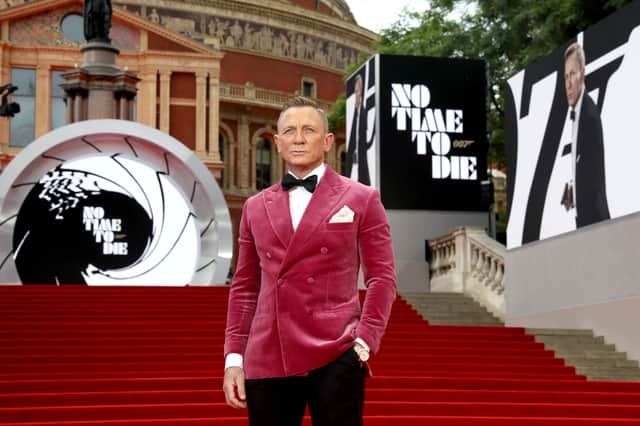
But these are reimaginings. Her Bond is recruited before the fall of the Berlin Wall, and with retirement at 45 looming is in a world with smartphones (and in a piece of pure panache, the new Q is a quantum supercomputer). Johanna Harwood, the new 003, has located Bond, who was being held by the Rattenfänger (Pied Piper) Group, and its sadistic leader Mora. The previous books were like Byron’s joke that his (later destroyed) memoirs were “the play of Hamlet with the part of Hamlet omitted by particular desire.” Again, this was a strategy of liberation. Compared with the le Carré continuation, Sherwood has the capacity actually to kill off new characters, which allows a level of threat to the books. We may meet Felix Leiter, Bill Tanner, René Mathis or even Trigger again; there is no guarantee they will live thrice.
If the film franchise wants to undo the stupidity of (spoilers, sweeties) killing off Bond in the last film, they might do well to look to Sherwood. If the BBC wants a new Smiley series, look at Harkaway. Perhaps the neatest link between them is, of course, both Control and 007 are designations, not names.
The Taper Man, by Nick Harkaway, Viking, £22; Hurricane Room, by Kim Sherwood, Hemlock Press, £18.99
The Scotsman’s arts newsletter is now sent twice a week - subscribe today
Enjoying the Arts & Culture journalism on scotsman.com? Make it easier to find by selecting us as a preferred Google source
Want the latest Scottish headlines sent directly to your phone? Sign up to our new WhatsApp channel here
Comments
Want to join the conversation? Please or to comment on this article.